
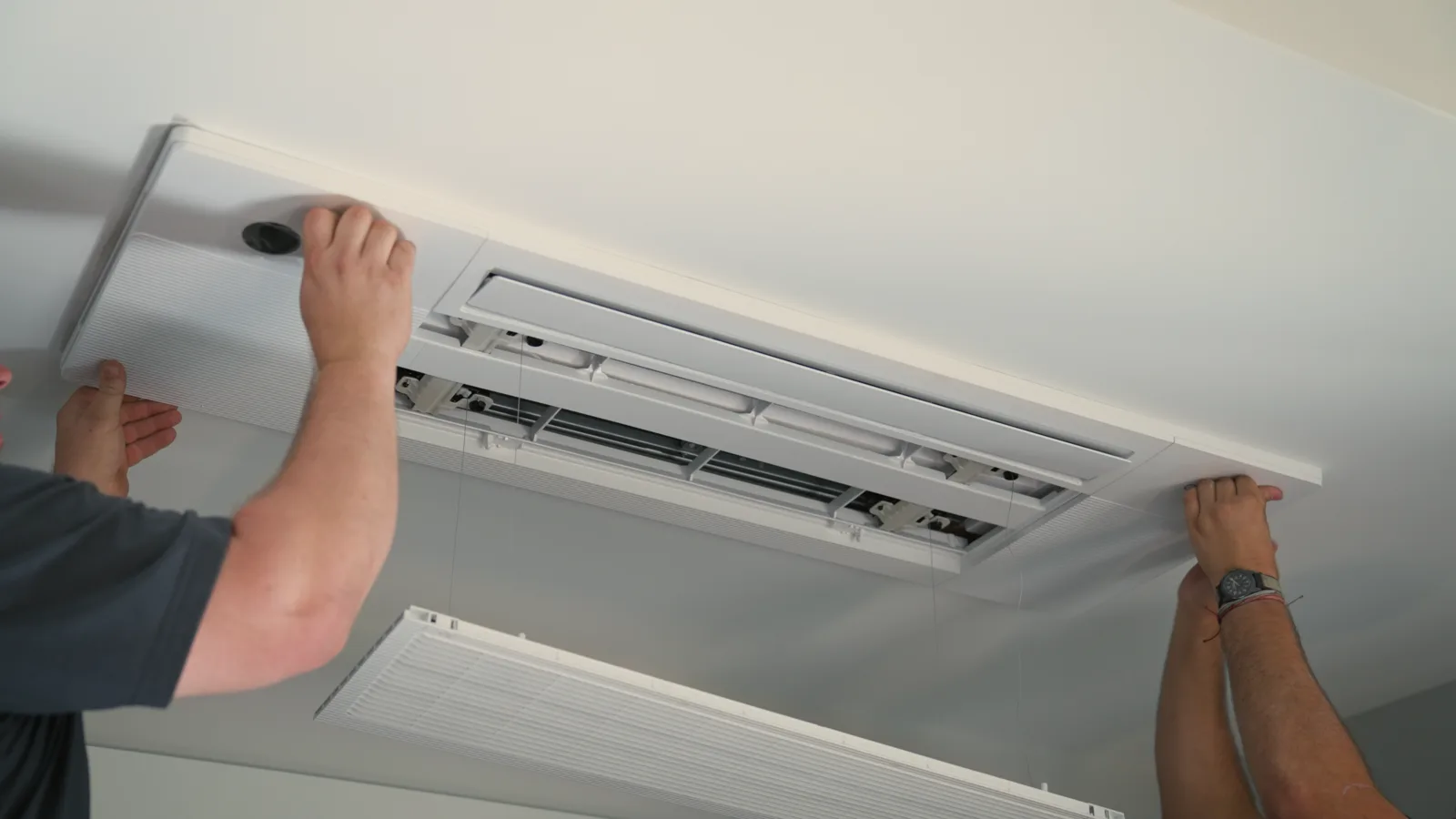
Quick answer: A ductless mini-split heats and cools without ductwork, which makes it ideal for older Maine homes, additions, and finished rooms. MC Electric installs cold-climate mini-splits from Mitsubishi Electric, Daikin, and Fujitsu, and because we are licensed for both trades we also handle the electrical hookup — with a free assessment.
A ductless mini-split is a high-efficiency heat pump that heats and cools your home without ductwork — a small outdoor unit connected by a thin line set to one or more wall-mounted indoor heads. At MC Electric Comfort Systems, we install, service, and repair cold-climate mini-splits across Central Maine, the Kennebec Valley, and the Midcoast, handling both the HVAC and the electrical in-house.
Why Ductless Mini-Splits Fit Maine Homes So Well
Maine’s housing stock is older than most of the country, and it shows in how our homes were built to heat. About 60% of Maine households still burn heating oil — the highest rate in the nation — and a large share of those homes were never built with central ductwork. They rely on boilers and radiators, baseboard, or a single oil furnace, and retrofitting full duct runs into a 19th-century farmhouse or a tight Cape is expensive, invasive, and sometimes impossible.
That is exactly the gap a ductless mini-split fills. Because the system moves refrigerant through a line set roughly the diameter of a garden hose instead of pushing air through sheet-metal trunks, we can heat and cool a room, a wing, or a whole house without tearing into walls and ceilings. For homeowners staring at another winter of oil deliveries at volatile prices, a mini-split is often the single most effective upgrade available — it replaces the most expensive fuel in the state with electricity, and it does it room by room where you actually live.
The fit is practical, too. There is no chimney work, no ductwork demolition, and no major reconfiguration of your existing system. Many of our customers keep their oil or propane boiler as a backup and let the heat pump carry the heating load for most of the year, which is a smart, low-risk way to cut fuel bills without betting the whole house on one piece of equipment.
Cold-Climate Performance: Yes, They Work Below Zero
The most common question we hear in Maine is whether a heat pump can really keep up when it’s 10 below. A decade ago that skepticism was fair. Today it isn’t. Modern cold-climate (hyper-heat) systems are engineered specifically for northern winters and continue to produce usable, comfortable heat well below zero — many rated to deliver meaningful output down to around -15°F and lower. These are not the same machines as the heat pumps your neighbor complained about years ago.
That performance is why we’re comfortable recommending a properly sized cold-climate mini-split as a home’s primary heat source, not just a shoulder-season supplement. The key word is properly sized: a system that’s matched to your home’s actual heat-loss load will hold temperature through a Maine cold snap, while an undersized or poorly placed one will struggle. Sizing is where a careful installer earns their keep, and it’s the part we never shortcut.
The bonus runs the other direction in July. A heat pump is a two-way machine — the same equipment that heats you in January delivers efficient, dehumidifying air conditioning all summer. For a lot of older Maine homes that have never had central air, that second function alone is worth the install. One system, year-round comfort, no window units rattling in the sashes.
Single-Zone vs. Multi-Zone (Whole-Home) Systems
“Mini-split” covers a range of setups, and choosing the right configuration is the first real decision. A single-zone system pairs one outdoor unit with one indoor head. It’s the right tool when you want to condition a specific area — an open-concept living room, a primary bedroom, a converted garage, a finished basement, or a home office over the garage that the boiler never quite reaches. It’s a smaller, faster, less expensive project, and it’s where many Maine homeowners start.
A multi-zone system connects several indoor heads to one (or more) outdoor units, each zone with its own thermostat and remote. This is the path to whole-home coverage: independent control room by room, so you’re not heating empty bedrooms or fighting over one setting for the entire house. Multi-zone is a larger investment and a more involved installation, but for households looking to substantially displace oil across the whole home, it’s usually the better long-term value.
There’s also the question of ductless versus a ducted or central heat-pump approach, which makes sense for some floor plans. We walk through that trade-off in our guide on ductless vs. central heat pumps in Maine. The honest answer is that the “right” system depends on your home’s layout, insulation, and how you actually use the space — which is the entire reason we start with a free in-home assessment instead of quoting a package over the phone.
What It Costs — and the 2026 Efficiency Maine Rebates
Cost is the other big question, and we believe in giving real numbers up front rather than hiding behind “it depends.” As a general budgeting guide, a whole-home cold-climate heat pump system in Maine typically runs somewhere in the range of $14,000 to $20,000 before rebates, or roughly $11,000 to $17,000 after incentives are applied. A single-zone mini-split is a meaningfully smaller project than a multi-zone whole-home system, so it lands well below those figures. These are ballpark ranges only — the firm number comes from your free assessment, because it depends on the equipment, the number of zones, line-set lengths, and any electrical work involved.
Here is where 2026 gets important. The federal 25C heat-pump tax credit expired on December 31, 2025, which means there is $0 in federal heat-pump credit for 2026. That makes Efficiency Maine the primary incentive program this year — and the good news is that it’s a strong one:
- $1,000 to $3,000 per qualifying single-zone outdoor unit, with the exact amount tiered by household income.
- A $500 whole-home bonus available through December 2026.
- 0% APR financing up to $25,000, so you can spread the cost without interest while the heat pump starts cutting your fuel bills right away.
Because the federal credit is gone, stacking the Efficiency Maine rebate with the whole-home bonus and 0% financing is the most effective way to bring a project into reach in 2026. We help every customer identify which rebate tier they qualify for and handle the paperwork so the savings actually land. For the full breakdown, see our 2026 Efficiency Maine rebate guide and our detailed heat pump cost guide for Maine. If you’re still weighing the decision overall, our piece on whether heat pumps are worth it in Maine lays out the math.
The Installation Process, Done With Veteran Precision
We’re a veteran-founded company, and that background shows in how we run an install: plan the work, then work the plan. A mini-split that performs flawlessly for fifteen years and one that disappoints in its third winter often come off the same equipment list — the difference is the care taken during installation. Here’s how we approach it.
- Free in-home assessment. We look at your home, your current heating system, your insulation and windows, and how you live in the space — not just square footage on a spreadsheet.
- Load calculation and sizing. We size the system to your home’s real heat-loss and heat-gain load. This is the single most important step, and getting it right is what lets the system hold temperature in deep cold without short-cycling or wasting energy.
- Head placement. We plan indoor-head locations for even comfort and clean air distribution, balancing performance with how the room looks and lives.
- Line sets and condensate. We route refrigerant line sets and condensate drainage cleanly, with proper support and protection — the unglamorous details that determine long-term reliability.
- Electrical. We run the dedicated circuit, install the disconnect, and make every connection to code — in-house, by licensed electricians on our own team.
- Evacuation, charge, and startup. We properly evacuate the lines, verify the refrigerant charge, commission the system, and walk you through the controls before we leave.
We’re licensed in Maine, New Hampshire, and Massachusetts, we offer free estimates and upfront pricing, and there are no surprises waiting in the final invoice. You can see a local example of how we work on our Augusta service-area page.
The Dual-Trade Advantage: One Team, One Call
This is where MC Electric Comfort Systems is genuinely different, and it matters more than most homeowners realize until they’re in the middle of a project. Nearly every mini-split installation has an electrical component — a dedicated circuit, an outdoor disconnect, and frequently a panel that needs attention before it can carry the new load. A lot of older Maine homes are running 100-amp service or an aging panel that simply doesn’t have room for a heat pump without an upgrade.
Most contractors are HVAC-only. That means when your panel needs work, they sub it out or send you to find your own electrician — two companies, two schedules, two invoices, two trip charges, and a finger-pointing risk if anything doesn’t line up. We’re a dual-trade shop: the same company that hangs the heat pump also handles the wiring and, if needed, the electrical panel upgrade. One team, one call, one point of accountability, one coordinated schedule. It’s faster, it’s cleaner, and it eliminates the most common way mini-split projects stall out in this market.
We Don’t Just Install Them — We Service Them, Too
A heat pump is a year-round appliance, and like anything that runs that hard, it benefits from upkeep and occasionally needs a repair. We service and maintain mini-splits whether or not we were the ones who installed them — including units put in by a contractor who’s no longer around or no longer answering the phone.
- Cleaning and maintenance: filter service, indoor-coil and blower-wheel cleaning, and condensate-line clearing to keep efficiency up and prevent the musty smells and weak airflow that come from a neglected head.
- Repairs: diagnosing weak heating or cooling, refrigerant and line-set issues, electrical and control faults, error codes, and outdoor units that won’t start or won’t keep up.
- Tune-ups: seasonal checks that verify charge, airflow, and electrical connections so small problems get caught before they become a no-heat call in January.
Because we cover both trades, a service call that turns out to be electrical — a tripped circuit, a failing disconnect, a panel issue — gets solved on the same visit instead of becoming a referral to someone else. Regular maintenance is also the cheapest insurance there is: it protects the efficiency you paid for and extends the life of a system you’re counting on to get you through the winter.
Mini-Split Questions Maine Homeowners Ask Us
Do mini-splits really work in Maine winters?
Yes. Cold-climate (hyper-heat) mini-splits are built specifically for northern winters and continue producing usable heat well below zero — many are rated to perform down to around -15°F and beyond. Properly sized and installed, a cold-climate system can serve as your home’s primary heat source through a full Maine winter.
Can a mini-split heat my whole house, or just one room?
Both. A single-zone system conditions one area — a living room, bedroom, or finished space — while a multi-zone system links several indoor heads to cover the whole home, each with independent temperature control. Which makes sense depends on your layout and goals, and that’s exactly what we determine during a free assessment.
How much does a mini-split cost in Maine in 2026?
As a general guide, a whole-home cold-climate system runs roughly $14,000 to $20,000 before rebates and about $11,000 to $17,000 after. A single-zone mini-split is a smaller project and costs considerably less. Because pricing depends on zones, equipment, and any electrical work, a free assessment is the only way to get a firm number — and we always quote it upfront.
What rebates are available in 2026?
Efficiency Maine offers $1,000 to $3,000 per qualifying single-zone outdoor unit (tiered by household income), plus a $500 whole-home bonus through December 2026 and 0% APR financing up to $25,000. Note that the federal 25C tax credit expired December 31, 2025, so Efficiency Maine is the primary incentive this year. We help you confirm your tier and handle the paperwork.
Is the federal heat-pump tax credit still available?
No. The federal 25C heat-pump tax credit expired on December 31, 2025, so there is $0 in federal credit for 2026. That’s why the Efficiency Maine rebate, the whole-home bonus, and 0% financing now carry the savings — and stacking them is the best way to make a project affordable this year.
Do I need an electrical panel upgrade to install a mini-split?
Sometimes. A mini-split needs a dedicated circuit and disconnect, and many older Maine homes — especially those on 100-amp service or with a full or aging panel — need a panel upgrade to carry the new load safely. Because we’re a dual-trade company, we assess this up front and, if it’s needed, handle the panel upgrade in-house on the same project.
Why hire a company that does both HVAC and electrical?
Because nearly every mini-split install touches both trades. With an HVAC-only contractor, the electrical gets subbed out or pushed onto you — two companies, two schedules, two invoices, and a finger-pointing risk if something doesn’t line up. We do both in-house: one team, one call, one accountable point of contact, and a single coordinated schedule.
Can a mini-split replace my oil heat?
For most Maine homes, yes — that’s the whole point. A properly sized cold-climate system can carry your heating load and displace expensive heating oil, which still warms about 60% of Maine households. Many homeowners keep their boiler as backup and let the heat pump do the day-to-day heating, which cuts fuel bills while keeping a fallback in place.
Do mini-splits provide air conditioning too?
Yes. A heat pump runs both directions, so the same system that heats in winter delivers efficient, dehumidifying air conditioning all summer. For older Maine homes that have never had central air, that’s often a deciding benefit — one system, comfort in every season, no window units.
Do you repair and service mini-splits you didn’t install?
Absolutely. We clean, maintain, tune up, and repair mini-splits regardless of who installed them — including systems whose original installer is no longer around. And if a service call turns out to be electrical, we can fix it on the same visit instead of referring you elsewhere.
Ready for a Quieter, Warmer, Lower-Cost Home?
Whether you’re cooling one stubborn room, replacing oil heat across the whole house, or you need an existing mini-split serviced or repaired, MC Electric Comfort Systems is the one team that handles every part of the job — the heat pump and the electrical — with veteran precision, upfront pricing, and free estimates. We serve Central Maine, the Kennebec Valley, and the Midcoast from our home base in West Gardiner. Contact us today for your free assessment, and we’ll give you a firm number, walk you through your Efficiency Maine rebate options, and get your home ready for whatever Maine’s weather sends next.
Cost and rebate figures shown are 2026 estimates; rebate amounts and eligibility are set by Efficiency Maine (confirm current details at efficiencymaine.com), and actual costs and energy savings vary by home.
What our customers say
“Forest took care of two of my mini-splits — fast, efficient — and helped me learn how to use my remote. I especially liked the text with the picture of the technician; it makes me feel safe.”
— Verified Google review
Related reading: Heat pump vs. central AC in Maine
"Professional, clean work, and the price was exactly what they quoted. Highly recommend MC Electric!"
Read More Reviews →Ready to Get Started?
Contact us today for a free estimate. No obligation, no hidden fees.
💳 Financing Available
View financing options →