
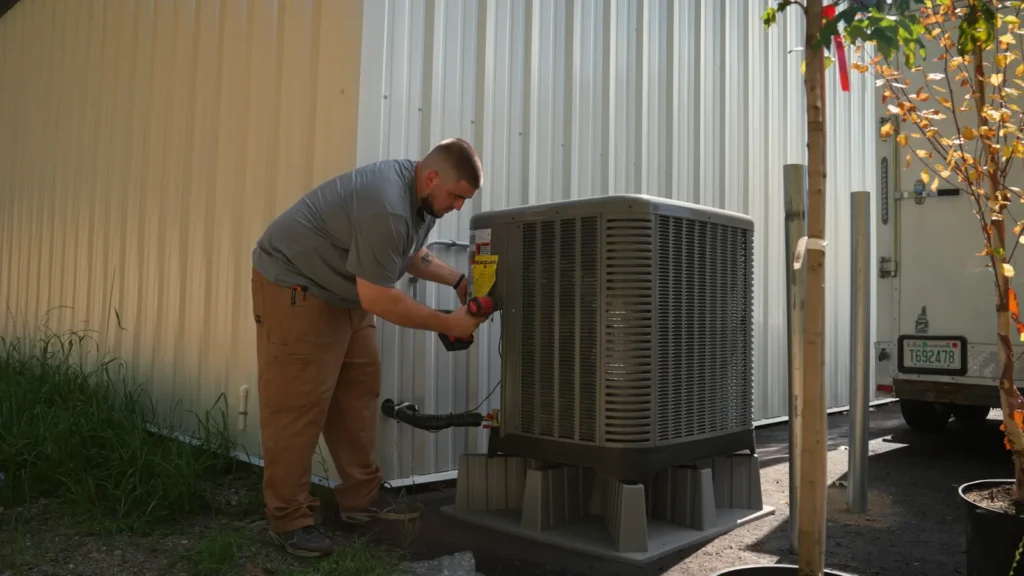
A ductless mini-split that smells musty, blows weak, or spits water at you is almost never broken — it’s dirty. The indoor head pulls dust, pet dander, cooking grease, and mold spores across a cold, wet coil all day, and over a year or two that buildup cakes onto the parts you can’t see. In Maine, where these systems run nearly year-round, the grime never gets a break. Professional deep-cleaning strips it back out so your system breathes, smells clean, and runs at the efficiency you paid for. Here’s what gets dirty, the warning signs, what a real cleaning includes, and how often Maine homeowners should book one.
Why Mini-Split Indoor Heads Get Dirty
A mini-split head is a small air handler bolted to your wall. To heat or cool a room it draws air in, passes it over an aluminum coil, and spins it back out through a blower wheel — thousands of times a day, depositing a little more of whatever is in your air each pass. Three places collect that buildup, and each one matters:
- The filters. The mesh screens behind the front panel catch the big stuff — lint, hair, dust. They’re the only part most homeowners ever touch, and rinsing them helps, but they only protect the surface. Plenty of fine particulate slips past.
- The evaporator coil. A dense bank of thin aluminum fins behind the filters. In cooling season it runs cold and wet with condensation — a magnet for fine dust and a breeding ground for mold and bacteria.
- The blower wheel. The part nobody sees, and the one that causes the worst problems. This barrel of tiny fins slowly fills with a black, felt-like layer of dust and mold that chokes airflow and flings odor and spores into the room.
A neglected head is the single most common reason a mini-split smells bad or loses airflow — nine times out of ten the unit isn’t failing, it’s just overdue for a deep cleaning.
Signs Your Mini-Split Needs a Deep Cleaning
Your system will tell you when it’s time. Watch and listen for these:
- A musty, sour, or “dirty sock” smell when the unit kicks on — the classic signature of mold and bacteria on a damp coil and blower wheel.
- Weak or reduced airflow, even on high fan, when a clogged blower wheel or coil is strangling the output.
- Visible mold or black spots on the louvers, around the air outlet, or on the fan barrel you can glimpse inside.
- Water spitting or dripping from the head, when a grime-clogged drain pan or blower flings condensation into the room instead of down the drain line.
- Higher electric bills with no change in usage — a dirty coil runs longer to hit the same temperature, and it shows up on your CMP bill.
- More dust, sneezing, or allergy flare-ups in the room the head serves, a sign it’s recirculating what it should filter out.
If you’re seeing one or two of these, a cleaning will very likely fix it. But if the unit is also short-cycling, throwing error codes, or leaking refrigerant, that points to a mechanical fault rather than dirt — a job for mini-split repair, not a cleaning.
What a Professional Deep Cleaning Includes (and What DIY Can’t Reach)
Rinsing your own filters monthly is smart, and we encourage it. But the filters are the only part you can safely reach — the coil, blower wheel, and drain pan sit behind the electronics, and getting them truly clean means dismantling the head. A professional deep cleaning is a different level of service:
- Power down and protect. We de-energize the unit and fit a cleaning bib around the head to catch the runoff, keeping your wall and floor clean.
- Deep-clean the evaporator coil with a coil-safe cleaner and a full flush of the fins, the step that brings heat transfer back to strength.
- Pull and wash the blower wheel fin by fin to clear the caked-on black buildup that chokes airflow and carries odor. A DIY rinse can never touch this, and it usually makes the biggest difference.
- Clear and treat the drain pan and condensate line, so condensation runs off cleanly instead of spitting into the room, and treat surfaces to discourage mold from returning.
- Clean the louvers and housing, then reassemble and test on both heating and cooling to confirm strong airflow and proper drainage.
The payoff is two-fold. A grimy coil can’t exchange heat efficiently, so a dirty system runs longer and burns more electricity to hit the same temperature — a clean head moves more air and stops quietly padding your bill. And because the mold and bacteria on a dirty coil get blown into your living space, deep cleaning is as much about the air you breathe as the power bill.
How Often Should a Mini-Split Be Cleaned in Maine?
For most Maine homes, a professional deep cleaning once a year is the right cadence. Schedule it every six months if any of these apply:
- You have pets that shed, sending more hair and dander through the head.
- Someone in the home has allergies, asthma, or respiratory sensitivity.
- The unit serves a kitchen, where cooking grease coats the coil faster.
- You run the system hard for both heating and cooling — which, in Maine, most people do.
That last point is the one out-of-state advice misses. Elsewhere a mini-split is a seasonal cooler that sits idle half the year, but here in the Kennebec Valley and the Midcoast these systems are the primary heat all winter and the air conditioner all summer, so they almost never rest. Year-round runtime means year-round buildup, which is why upkeep matters more in Maine than the manufacturer’s generic schedule suggests.
Why MC Electric — the Dual-Trade Advantage
MC Electric Comfort Systems is veteran-founded, and we run every service call the same way: plan the work, then work the plan. What sets us apart is that one licensed team handles both your heating and cooling and your electrical, in-house. That matters for mini-splits — when we clean a head, we also understand its electrical side, so if the disconnect or circuit looks off, we diagnose it on the spot instead of sending you to a second contractor. Most companies are HVAC-only or electrical-only and sub the other trade out — two schedules, two invoices, finger-pointing when something breaks. With us it’s one accountable team that can also carry a new mini-split installation or an electrical panel upgrade when you’re ready.
The simplest way to keep your system clean and efficient is to stop thinking about it: our maintenance plans bundle annual deep cleaning with the rest of your seasonal HVAC and electrical upkeep, so it just gets done on schedule. We serve homeowners across Central Maine, including Augusta and Brunswick. When your head is overdue, reach out for a free estimate and we’ll get it clean again.
Questions Maine Homeowners Ask Us About Mini-Split Cleaning
Why does my mini-split smell musty when it turns on?
That sour, musty, “dirty sock” smell is almost always mold and bacteria on the damp evaporator coil and blower wheel, and the fan blows it into the room every time the unit runs. A professional deep cleaning that pulls and washes the blower wheel and treats the coil clears it out — an air freshener or filter rinse won’t reach the source.
Can’t I just clean the mini-split myself?
You can and should rinse the mesh filters monthly — that part is easy and helps. But the coil, blower wheel, and drain pan sit behind the electronics and can only be cleaned by partially dismantling the head, which is exactly where the real buildup and odor live. DIY handles the surface; a professional handles everything the filters miss.
How often should I have my mini-split professionally cleaned in Maine?
Once a year is right for most Maine homes, and every six months is smart if you have pets, anyone with allergies or asthma, or a head serving a kitchen. Because these systems run nearly year-round here, they collect buildup faster than a generic seasonal schedule assumes, so don’t stretch the interval too far.
What’s the difference between mini-split cleaning and a repair?
Cleaning addresses dirt — odor, weak airflow, visible mold, and water spitting from a fouled coil, blower wheel, or drain. Repair addresses faults — short-cycling, error codes, a dead remote, or low refrigerant. If you’re not sure which you need, our dual-trade team can look and tell you straight. For confirmed faults, see mini-split repair.
"Professional, clean work, and the price was exactly what they quoted. Highly recommend MC Electric!"
Read More Reviews →Ready to Get Started?
Contact us today for a free estimate. No obligation, no hidden fees.
💳 Financing Available
View financing options →